

Having ADHD doesn’t have to get in the way of a successful career. In fact, ADHD can be considered an asset rather than a liability when it comes to work. We talked to three people who’ve had very successful careers — and consider their ADHD to be an asset in their professional lives. These three professionals share their thoughts on navigating successful careers with ADHD.
****
Kristina Bird is head of photography and marketing at bird & bird studio, which she co-owns with her husband, Adam. While she had a successful career as a marketing professional before she transitioned to her current business, she says being diagnosed with ADHD in early 2022 helped her succeed in new ways.
“I was successful before, but I was successful and struggling,” says Bird. “I’ve lived my whole life with ADHD and have come up with some coping mechanisms. But getting the treatment has definitely showed me that life could be so much easier.”
Over the years, she lived with anxiety and depression that she believes were symptomatic of ADHD.
“So, when making phone calls and talking with clients, my anxiety would spike up and I had a lot of impostor syndrome with it, too,” Bird says.
During interactions with clients, she was so focused on anticipating questions and figuring out what her responses would be that she didn’t really hear what the client was saying.
After receiving an ADHD diagnosis and specific treatment for it, she says conversations are smoother. She’s also able to stay on task and accomplish more.
“I feel so much more confident and on top of myself because I don’t have that anxiety and that voice in my head constantly going over multiple things,” she says. “I’m able to stay focused on what’s in front of me.”
She credits her newfound confidence for some of her success, noting that exuding confidence gives her clients more faith in her abilities as a professional.
“If you’re not confident, they’re going to think you don’t know what you’re doing. And if you don’t know what you’re doing, they’re not going to hire you,” says Bird. “Confidence comes from being able to slow down.”
Confidence also helps counter feelings of self-doubt and inadequacy.
“I know now that I’m not stupid and that my brain just works differently than others,” she says.
Practical tools she uses to stay on task at work and life include making lists. For example, before going to a job interview, she suggests creating a list of questions about the potential job and work environment, such as:
- What does success in this position look like?
- What responsibilities does this position entail?
- What is needed to advance to the next role?
“It’s easy for us to go above and beyond what is expected of us (usually without any additional compensation) and we get burned out,” Bird says. “Answers to questions like these will give you a guideline of what’s expected and help keep you from being overwhelmed later in your career.”
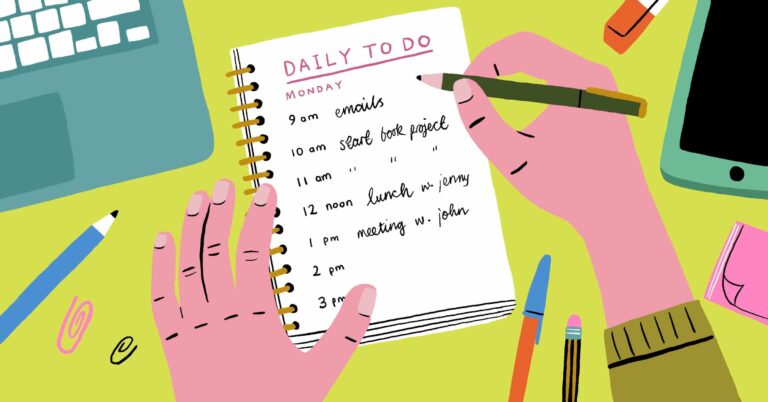
She also recommends making a to-do list for work-related responsibilities by using a bullet journaling approach or writing in notebooks.
“I like to organize mine by what’s most urgent,” Bird says. “It also gives me a nice endorphin boost when I cross things off.”
****
Olivia Jaras spends her days helping women increase their pay and improve their self-worth through her companies hermoneyschool.com and salarycoaching.com.
While she’s always been dedicated to her work, she says one sleepless night last year made her question her behaviors.
“It was 3 a.m. and I thought: ‘Why am I stressing?'” she says. “None of my businesses were giving me problems. I felt like I liked what I do. I wasn’t anxious or depressed and I started searching online.”
After Jaras came across ADHD Online, she asked her mom if she thought she showed signs of the condition. To her surprise, her mom told her that when she was 6 years old, a doctor prescribed her Ritalin. However, after a teacher told her mom that it wasn’t good for Jaras, her mom took her off the medication.
When Jaras learned this, she pursued being evaluated and received an ADHD diagnosis.
“I always thought I was just stupid. I couldn’t for the life of me understand why I was so slow in school, why was I not able to comprehend things. Everyone seemed so much smarter than me. So I had to develop some serious coping mechanisms, which was
learning how to read people and communicate on the same level,” she says.
These skills help her with her career, she notes. “Most of what I do with salary coaching is about teaching people how to negotiate and be persuasive and influence behavior more than it is about actual numbers.”
However, when she began taking medication for ADHD, she says her life changed for the better. While she was ashamed of her diagnosis at first, a counselor helped her understand that learning about the condition and treating it would help her focus on one track of thought at a time and have more control over those thoughts.
“The reason I couldn’t fall asleep or stay asleep was because I had so many tracks going on. Now I sleep like a baby,” says Jaras.
Being well-rested helps her in her daily work, which involves consulting for top female executives and managers. She manages large databases of data that help to quantify her clients’ current market value. She also teaches workshops on the same topic at companies and organizations for women in science, mathematics and information technology.
“Really my work is about how to improve your self-worth, which was always a struggle for me before I figured out: ‘I have ADHD.'” she says. “So it all came together when I realized this is what life should feel like.”
Her diagnosis also taught her to be more comfortable turning down work and to stop filling the need to please people.
“I’m much more able to control my thoughts,” she says. “I can think on many wavelengths at the same time like before my diagnosis. But now, when I want to, I can focus on one, which is not something most people can do.”
She no longer doubts her skills, either. “I had anxiety about whether I did my job well enough and fears that someone else was out there doing it better,” she says.
Now she realizes that her way is what made her successful.
For those who doubt their skills and abilities in the workplace, Jaras says people should consider historical figures who have been highly successful, such as Albert Einstein and Bill Gates. They didn’t have ADHD, but they thought about things very differently.
“Those people learned that it’s okay not to do everything like the rest of society does. If you choose to make ADHD an asset, that’s when you realize it’s an absolute superpower and can only help you in your success,” she says.
****
Zachariah Booker grew up in a family of entrepreneurs, and for as long as he can remember, he wanted to be just like them.
“It’s been an inspiration of mine to see people around me succeed and fail. And to be able to apply that risk tolerance in my life was seamless — and something I’ve always wanted to do,” he says.
With 20 years of entrepreneurship behind him, his most recent success is working as the co-founder and CEO of ADHD Online. The business is particularly special to Booker because he was diagnosed with ADHD when he was 17.
“It’s been a great experience to witness the growth that we’ve seen, and to help thousands and thousands of patients across the nation understand what’s going on inside of their mental space — and provide clarity and a custom care plan for them,” says Booker.
The fact that ADHD Online provides free educational articles, webinars, blogs and podcasts is also rewarding for him. He says he never let ADHD get in the way of his success, and instead uses it to his advantage.
“I see ADHD as my superpower, not a disability. I see it as an ability,” he says.
He considers ADHD to be synonymous with fast or swift, characteristics that allow him to think outside the box, to look at situations and circumstances from different angles and to find different solutions quickly.
When he experiences failure, he says he doesn’t put the blame on ADHD.
“Of course sometimes I say the wrong things at the wrong times, but that’s normal,” he says.
For instance, during interviews, he admits his ADHD can occasionally be a hindrance as he is often unfiltered and thinks about multiple things to say at once.
“What I’ve learned throughout my management of ADHD is that when I find routine or systematic rigor, I’m able to apply a more methodical way of managing my thoughts and actions, whether it’s medication or routine or processes that I’ve developed. That’s what I lean on,” he says.
For those attending college or starting a new job, he suggests the same approach. Rather than looking at ADHD as a disability or flaw you need to explain to people, he says, accept the condition as a way to show your personality.
“Mental health in general is more discussed today than it ever was,” Booker says. “Today, people — especially with ADHD — should be able to have that free will to discuss who they are and not be afraid, or hide behind a disorder.”
However, because stigma and misunderstanding of ADHD still exist, people should embrace opportunities to educate others about the condition, Booker says. For instance, if a college student is having trouble articulating struggles that they’re experiencing due to their ADHD, they might want to explain why they might need extra time for tests or non-traditional methods of learning to understand the curriculum.
Before a job interview, he recommends, establish what you hope to get out of the interview. Think about questions you might be asked, and develop bullet points for your answers and topics you want to discuss.
“It’s a lot of preparation ahead of time. But this practice may help you better answer questions on the fly, and drive more depth around subjects you really want to hit on during an interview,” says Booker.
And no matter what career path you take, he stresses that you can succeed with ADHD. “Don’t see it as a barrier; see it as an opportunity,” he says.
Sources: