
By Cathy Cassata
Life transitions are hard for many people. Going to a new school, moving out of your parents’ house, or getting your first job can all cause stress. However, for those living with ADHD, these events can be especially difficult.
“I think of this as a balance between the environmental demands and the available resources,” explains Kevin M. Antshel, Ph.D., professor of psychology at Syracuse University.
Environmental demands include things like keeping up with academics, finding a place to live, and to work. These types of demands tend to increase in number, scope and complexity as people get older, says Antshel.
The available resources to meet these demands include both internal and external resources. Internal resources are the ability to:
- sustain focus
- plan and prioritize tasks
- use your working memory
External resources include people such as parents, teachers and others who help navigate environmental demands.
“As we get older, the external resources tend to go down while the environmental demands are going up, and this creates an imbalance that is hard for those with ADHD,” Antshel says.
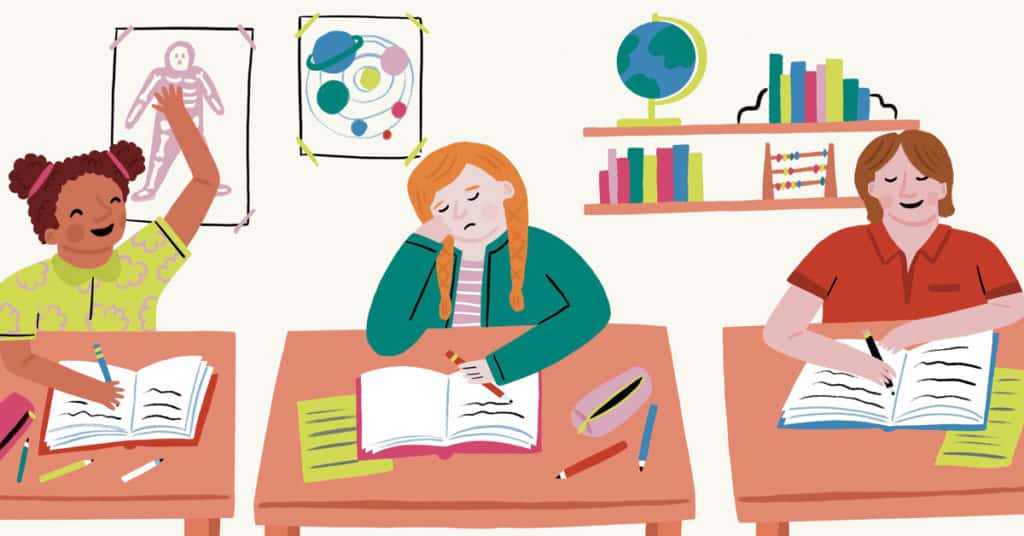
For example, he notes that a lot of data suggests elementary teachers are more hands on with students and give them more attention and guidance than teachers in middle school. And middle school teachers are more attentive with students than teachers in high school.
“Everything is new — a new building to navigate, new teachers to get used to, and new friends to meet. During these transitions, (those with ADHD) are at increased risk for impairments,” Antshel says.
Different transitions may be harder for some than others. Antshel notes that, as people age, those with ADHD become more aware that life changes may affect them. For example, he notes, by the time young adults with ADHD graduate college and enter the workforce, they understand that the transition will be challenging.
“But this could be a bias sampling because people who transition out of college have been successful with college. They’ve developed a way to manage it,” he says.
Antshel adds that going to college is one of the most difficult challenges for those with ADHD.
How to cope with entering college
Graduating high school and moving on to college or out of a parent’s house is a more significant transition than going from middle school to high school, says Antshel. In high school, many kids are living with a parent under parental supervision.
“When they leave, it can be more jarring as they are living away from home, expected to have financial independence, and might be working and dating,” he says.
When he works with young adults with ADHD going through this transition, Antshel helps them implement the following coping strategies:
- Understand college is different than high school
Parents and others should give a college-bound student a realistic picture of how the experience will differ from high school. That’s the first step toward students knowing what is needed to succeed in college.
“Explain that things like essay writing will be the top priority in college or that lecture attendance is seldom mandatory, how there might be just a few papers or tests that can determine their entire grade, or that class sizes can range from four people to 500,” says Antshel.
- Develop a routine
Routine is important for people with ADHD who have a shorter attention span or decreased working memory. The more that minor things can become habitual, the more people are able to open up their working memory “to be able to deal with new things,” Antshel says. “So when you transition to something new, try to develop a routine as quickly as possible.”
Daily routines begin with a healthy sleep/wake cycle. “Even if you don’t have a class until 2 p.m., you want to develop a consistent wake-up time so your sleep/wake routine becomes consistent,” Antshel says.
Even if sleep/wake routines were established in high school, there are more distractions in college that could break the routine, he says.
Establishing weekly routines like days to exercise, wash laundry, work on homework and socialize can also help. “This should all be planned in advance so that they become as habitual as possible. Practicing the summer before college is a good way to get started,” says Antshel.
- Focus on strengths, not limitations
Focusing on everything a teenager cannot do does not create a climate that allows them to flourish.
“We want the child to move toward self-determination and autonomy,” Antshel says. “Figuring out what their strengths are and how to build them into their routine will help them be successful.”
- Use of planners and schedulers
Antshel talks to his clients about the difference between a planner and calendar. He explains that calendars are for marking when things are “due” and planners are best for noting when you are going to “do” things. “People with ADHD need a planner,” he says.
- Parental guidance on intrusive behaviors
Antshel works with parents of young adults living with ADHD to identify the parents’ own behaviors that may be unwittingly limiting autonomy for their college student. He says autonomy-limiting behaviors from parents might include a parent trying to:
- prevent their kid’s mistakes
- structure their child’s life
- perform direct interventions, such as calling the son’s or daughter’s roommate, intervening with the child’s romantic partner, calling to wake them up for class, washing their clothes, or helping with college assignments.
“These behaviors may have gone on in high school, but shouldn’t occur in college,” Antshel says. “I try to get parents to be aware of this and why it’s not the best for the child during a transition.”
He does encourage parents to engage in information-seeking behavior like getting a periodic update from their teen on a daily, weekly or monthly basis.
“Asking about their grades, having an awareness of their schedule, helping them make decisions — these tend to be associated with better transitioning than the autonomy-limiting, direct-intervention stuff,” he says.
Getting a job, becoming a parent, and losing a loved one
Other life transitions can also be difficult for those with ADHD.
- New jobs
Getting a first job or transitioning to a new job can pose challenges with time management and balance. Therapy and medication might help during this time.
“This is a time when I might recommend medication to help with the transition until they can get acclimated to the new job,” Antshel says. “And once they establish routines and feel like they’re functioning well at their job, they can consider going off medication.”
- Becoming a parent
Parenthood is another major life change that Antshel says especially affects women with ADHD.
“Unfortunately, there still seems to be a bias in our society — a lot of the parenting and direct intervention falls on moms. There is more data on parenting in mothers who have ADHD and how this can be a tremendous transition for them,” Antshel says.
The silver lining, he notes, is that by the time many women become mothers, they have some awareness that the transition will be difficult. Leaning on methods that have helped them manage their ADHD before parenthood, as well as asking for additional support from family and friends, can make it easier to navigate parenthood.
- Death of loved ones
The death of a loved one is a difficult life change for most people. For those with ADHD, Antshel says, loss can be particularly hard if the person who passed away was a source of social support.
“This can push someone into a state of imbalance,” he says. “Try to harness the available social supports that are there to help correct that loss of an external resource.”